
The Execution Gap in Onchain FX
Superset is the unified liquidity execution layer for onchain FX: the single layer that consolidates fragmented liquidity across currencies, chains, and the spectrum of different kinds of tokenised money into one executable market. For market makers, liquidity providers, banks, treasuries, and issuers, this means institutional-grade execution in a market that is otherwise fragmented.
Superset does this by leveraging communication protocols and bridges that are battle-tested and already adopted across onchain markets.
Figure 1: Superset is the execution layer on top of bridging and messaging rails
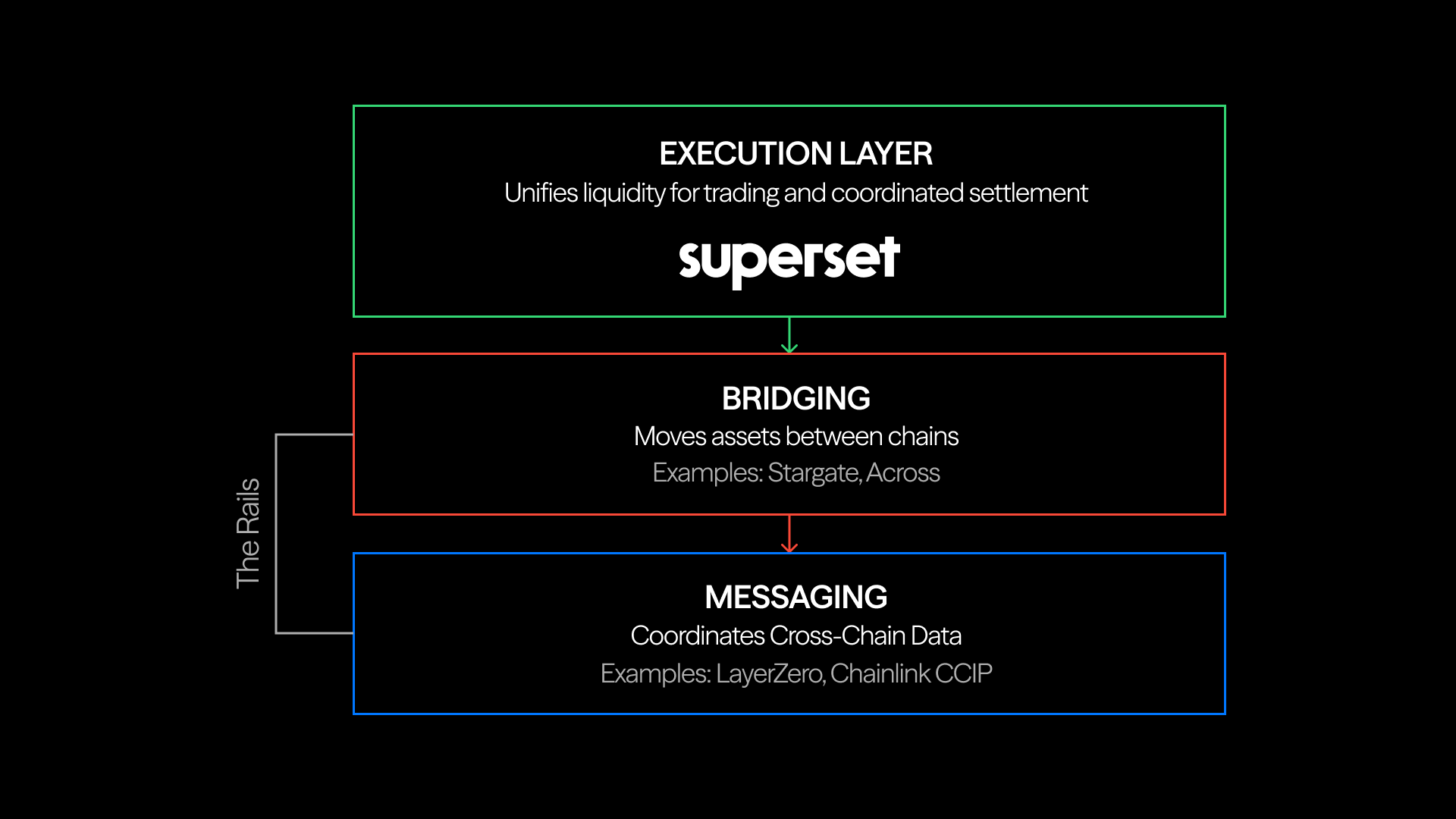
Messaging and bridging move information and assets. They do not create a shared execution layer with unified pricing and fill quality. This is where Superset comes in: one integration point that turns fragmented liquidity into a unified execution interface.
Fragmentation still hurts best execution. Prices diverge across chains and venues, and depth is thin where size needs it. A trade that should fill against broad market depth often hits the edge of a local pool and incurs slippage.
Figure 2: Same trade, different outcomes
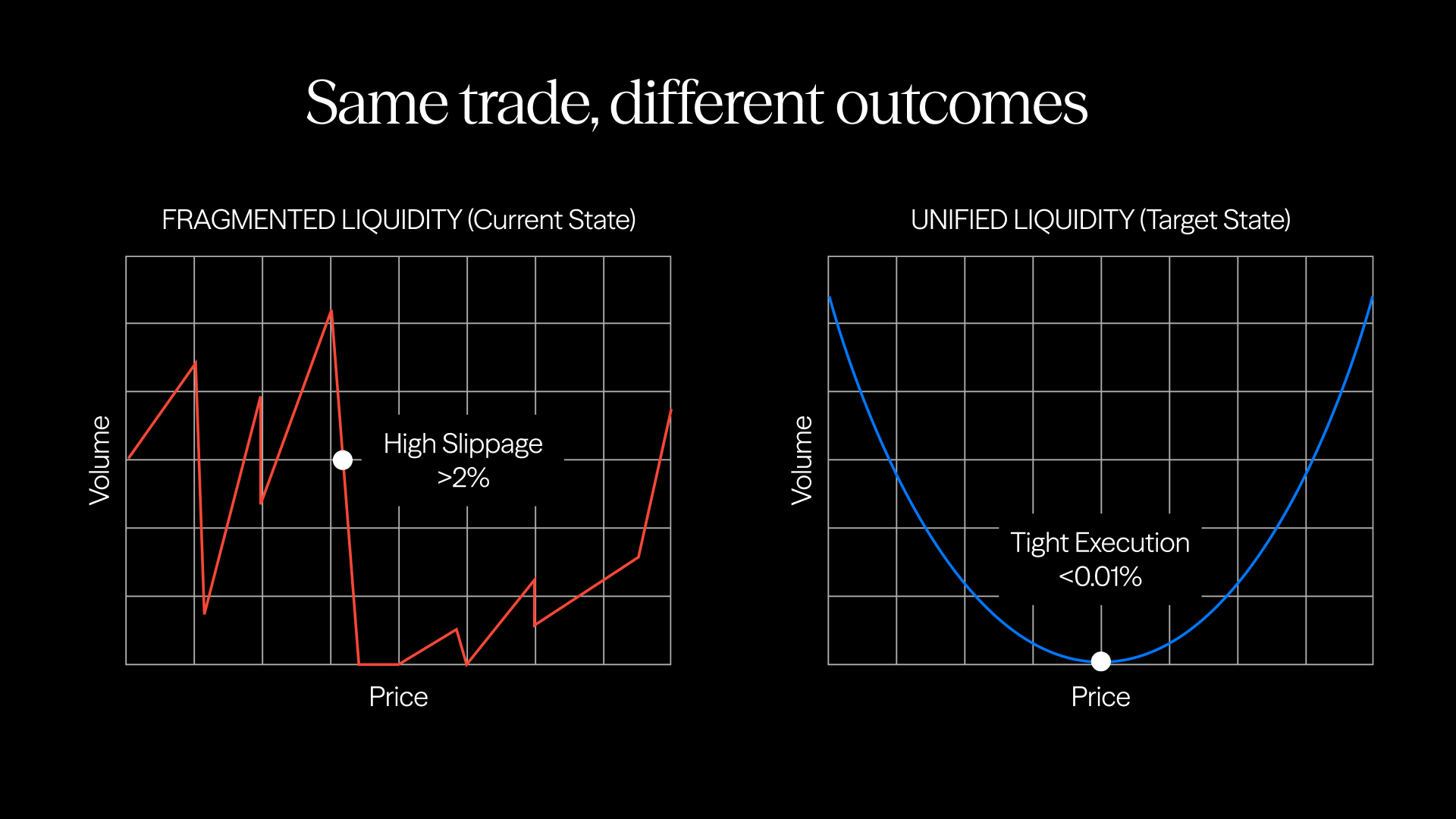
That makes the need plain: an execution layer that unifies liquidity across the market.
The Unified Liquidity Execution Layer
To fill this gap, Superset introduces the Unified Liquidity Execution layer (ULX), an infrastructure that consolidates fragmented liquidity into deep consolidated markets, money tiers, and chains, so participants get consistent execution from one entry point. The focus is on execution, not transport.
Superset uses a hub-and-spoke virtual liquidity model, with a virtual AMM (vAMM) and coordinated cross-chain settlement, to present one market interface.
In the stack, messaging coordinates data and bridges moves assets. Neither creates a unified place to trade or a shared price for the market. The execution layer sits above those rails. It is where liquidity is consolidated, pricing is formed, and fills are delivered.
Superset does not compete with transport; it uses these protocols as rails for its own execution logic.
By abstracting the transport layer, Superset’s design has three pillars:
- Unifiedexecution: consolidates liquidity across chains, currencies, and money tiers into a single executable depth pool.
- Coordinated settlement: protocol-level coordination across chains and instruments to reduce execution friction.
- Openneutrality: rules-based, transparent utility; a neutral venue is a prerequisite for banks and fintechs.
The outcomes are consistent pricing across a fragmented market, predictable fills on size, and coordinated settlement across chains and instruments. Those outcomes matter most to the side of the market that supplies the depth.
Primary Beneficiaries: Market Makers & LPs
Market makers and LPs are first to feel the cost of fragmentation because they carry the inventory. In onchain FX, that inventory gets split across currencies, tiers, and chains. The same USDC exposure becomes ten separate positions. The same EUR liquidity gets re-created on every chain. Capital that could be reused across chains ends up stranded.
Figure 3: Deploy once, access unified depth across multiple chains
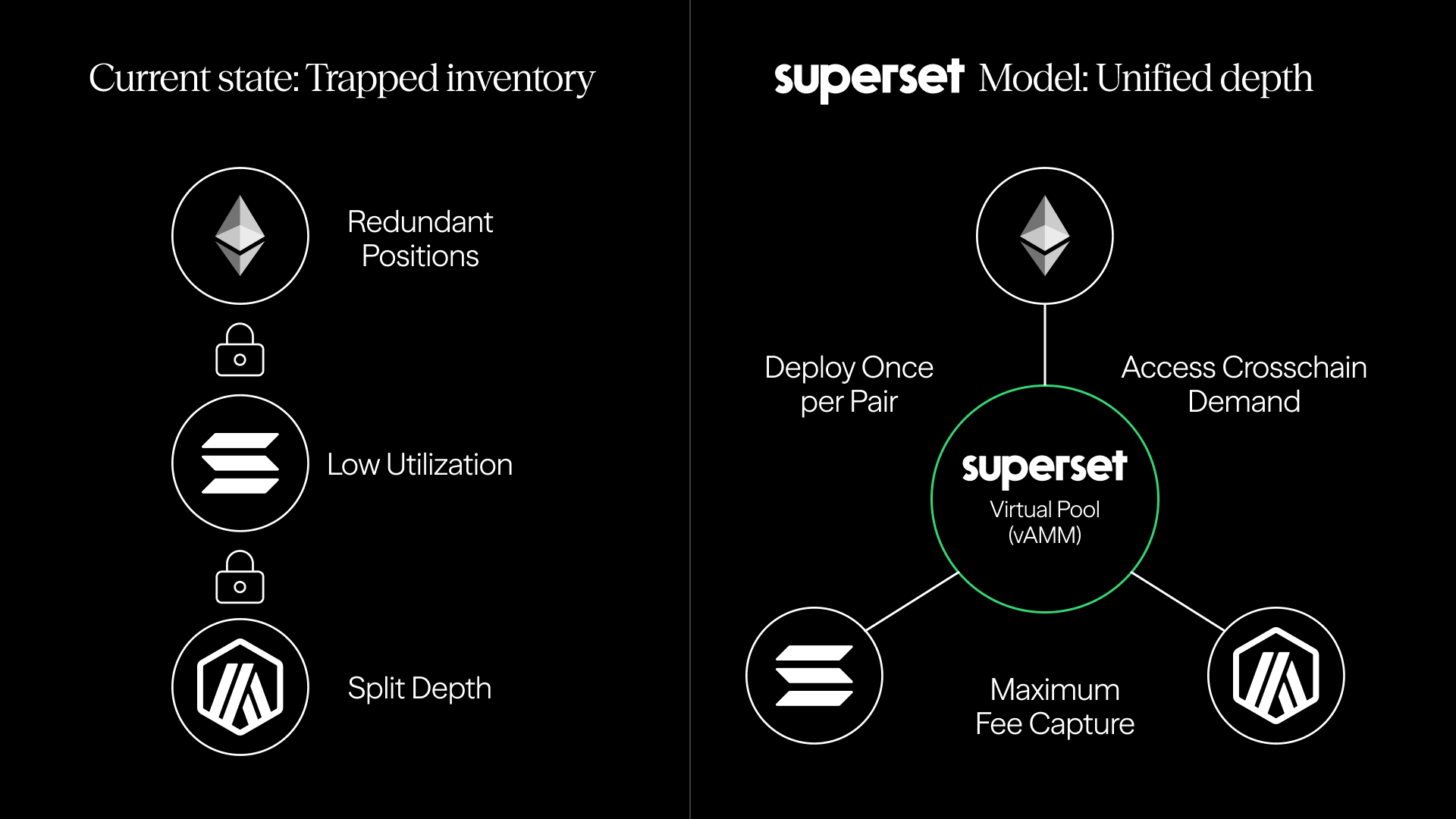
Superset’s value proposition to this group is: deploy once per pair or tier and access flow across chains. Unified depth allows tighter spreads because capital is not trapped in isolated pools. The same inventory can serve demand across chains, which improves utilization and fee capture.
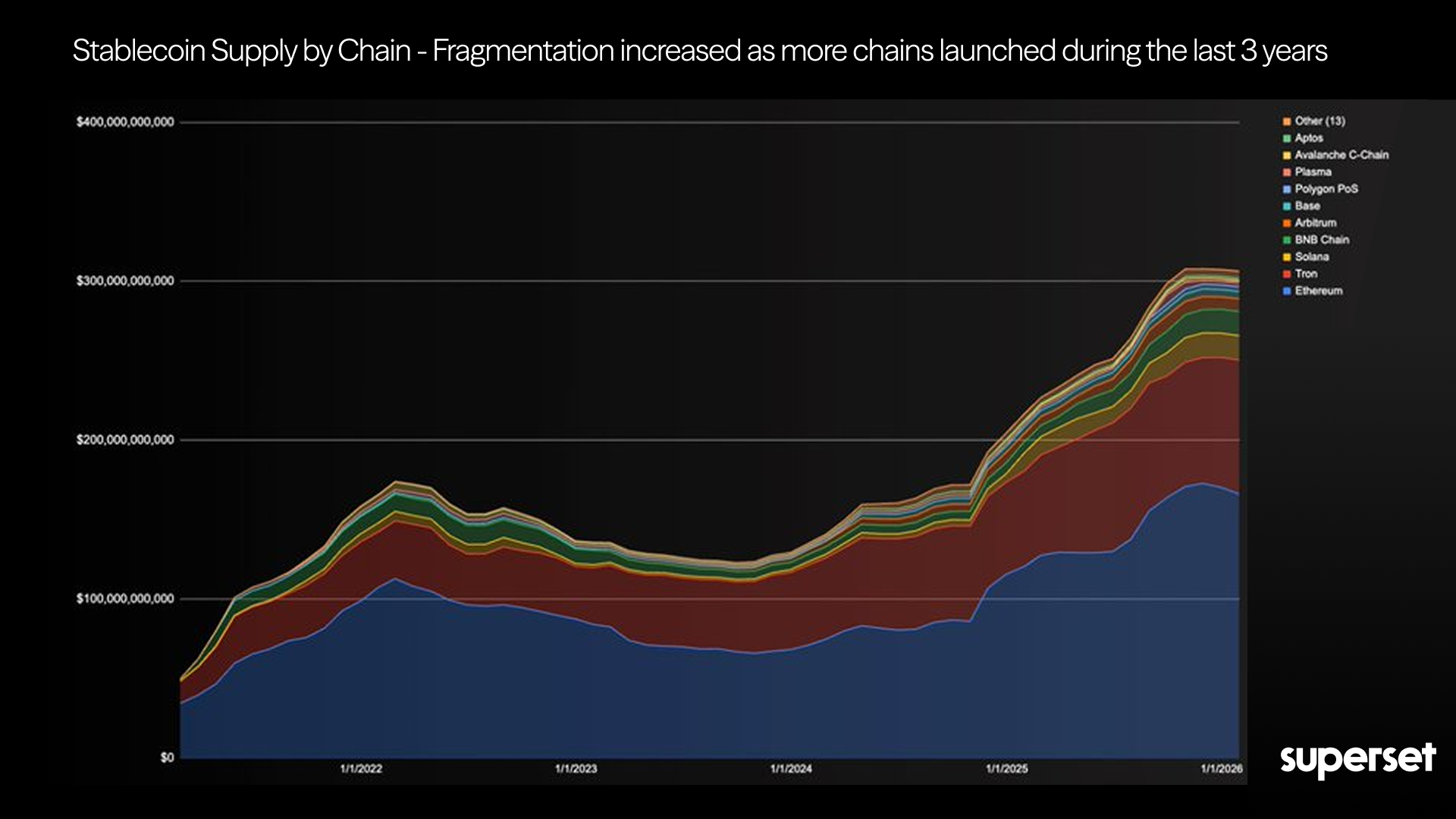
Figure 4: The stablecoin supply is currently distributed across 149 active blockchains, with half of it on Ethereum
Mechanically, Superset prices each pair against a virtual pool that consolidates liquidity from multiple chains. LPs still choose which pairs or tires to provide, but they do not need to maintain redundant positions on every chain for that pair. For regulated assets, pools can be identity-gated while still benefiting from unified execution.
There is also an operational moat. Fewer positions to manage, fewer rebalancing workflows, fewer crosschain moves just to keep quotes live. For professional LPs, the change is structural as it reshapes how inventory can be run.
Integration: One Access Point
Unified liquidity only matters if builders can access it cleanly. Superset’s integration posture is partner-first: one integration point that exposes unified depth across currencies, chains, and tokenized assets. That matters most for aggregators, wallets, payments, and treasury workflows that need consistent execution without tying together separate liquidity venues.
Figure 5: Superset as the execution integration layer
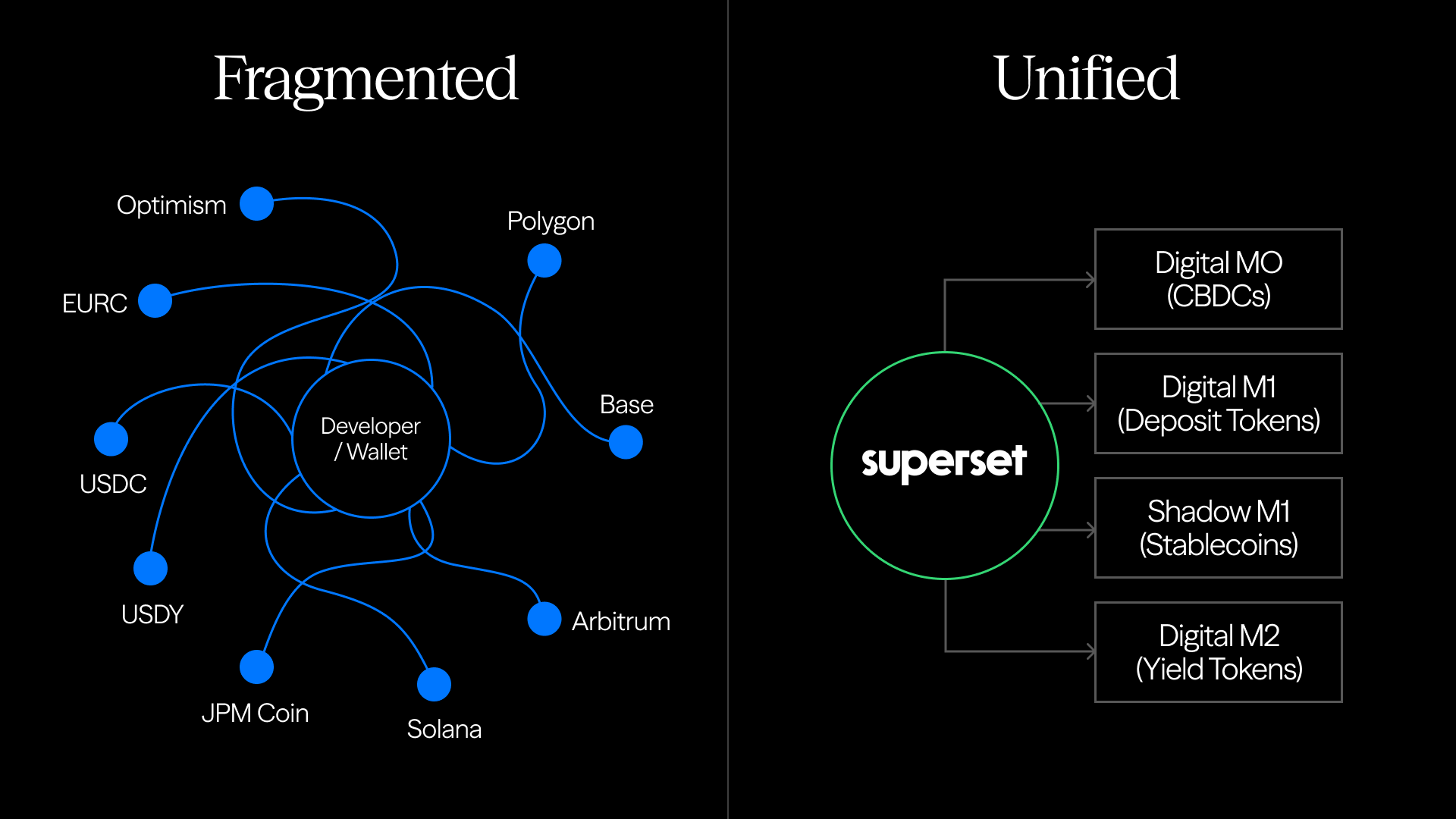
Superset does not replace messaging or bridging. It uses those rails to coordinate data and settlement while focusing on execution. @LayerZero_Core and @chainlink standards provide messaging, while bridges move assets. Sitting on top of these rails allows us to turn fragmented liquidity into a single market interface.
Developers can integrate one execution layer rather than manage separate pools and routes for each chain. That cuts integration overhead and makes cross-currency, cross-tier execution a product feature instead of a custom build.
Why Now
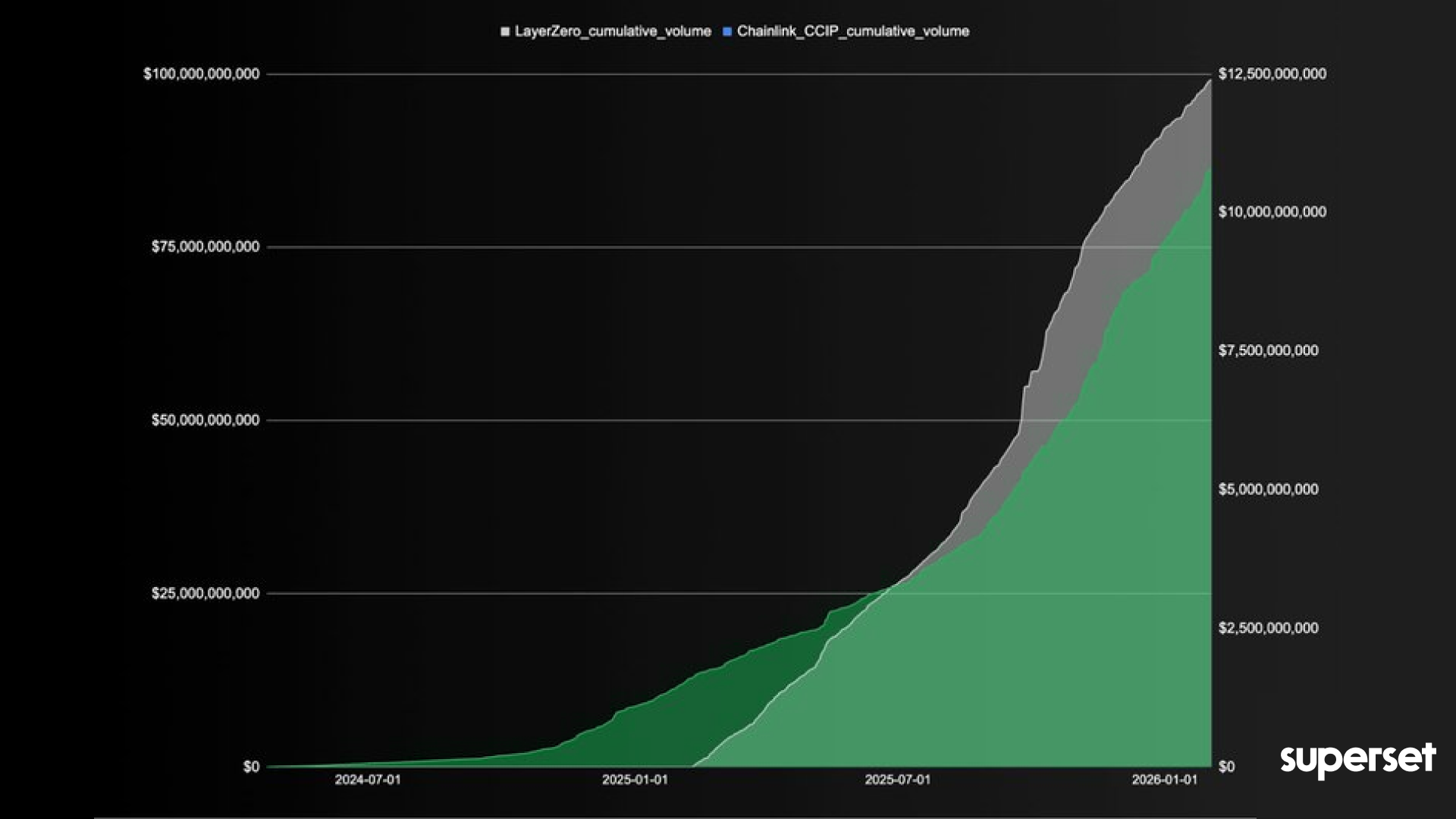
Superset focuses on execution outcomes: consistent pricing, predictable fills on size, and coordinated settlement across chains and instruments. It defines a clean category boundary. Messaging and bridging are rails. Execution is where liquidity unifies, and price discovery becomes reliable. By using battle-tested protocols like Chainlink and LayerZero as communication rails, Superset extends their utility into onchain FX execution workflows.
Figure 6: LayerZero and Chainlink both continue to facilitate significant amounts of communication volume
Traditional FX has a precedent. EBS consolidated fragmented dealer liquidity into a single venue and improved price discovery. Superset aims for a similar outcome in onchain FX, but the cause of fragmentation and the mechanism are different. Fragmentation comes from non-interoperable chains and divergent money tiers, not competing brokers. The mechanism is a hub-and-spoke virtual liquidity model with a vAMM, not a central limit order book (CLOB).
More currencies, more tokenized instruments, and more cross-chain activity have made the splits worse. Execution quality now shows who can scale. Superset’s role is to unify that execution. Superset is the unified liquidity execution layer for onchain FX.